
Roblox Russia Ban: Gamer's View on Controversies and Global Impact
Explore the impact of the Russian Roblox ban on global gaming communities, highlighting censorship, free expression, and the platform's vibrant metaverse.
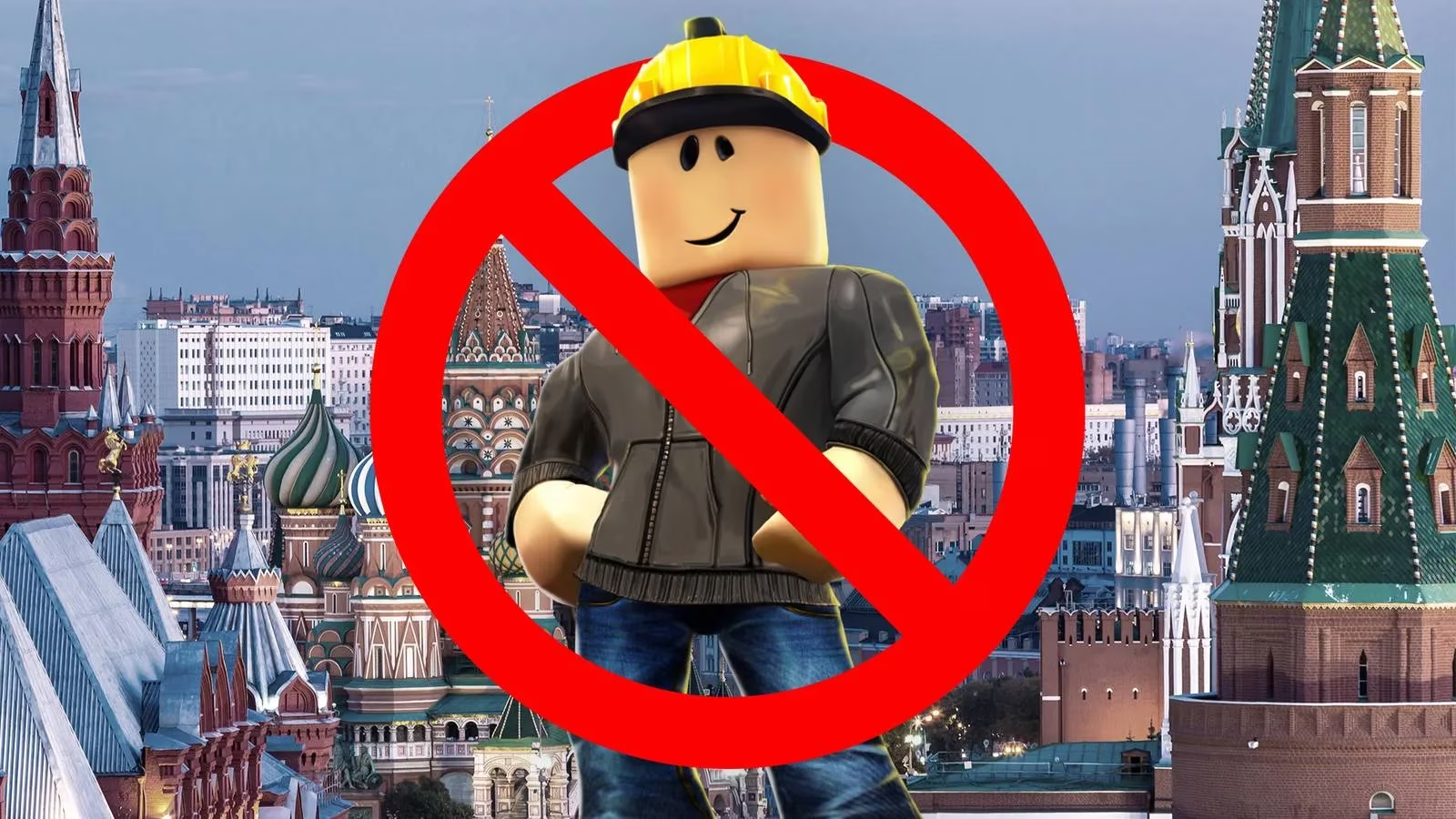
As a professional gamer deeply immersed in the digital world, I was taken aback when news broke in December 2025 that Russia had officially banned Roblox nationwide. This wasn't just another geopolitical ripple; it felt personal. I've spent countless hours exploring Roblox's vibrant metaverse, connecting with players globally, and watching its evolution since its 2006 launch. Now, over 2 million daily active Russian users are suddenly cut off, all because Roskomnadzor, Russia's media watchdog, claims the platform spreads propaganda—including terrorism and LGBTQIA+ advocacy. 😢 The ban hits hard, especially as someone who values the platform's creativity, but it also raises unsettling questions about censorship in our interconnected gaming era. How did we get here? And what does this mean for players like us? This decision, as I see it, isn't isolated; it's part of a growing trend that threatens to fragment the very communities we cherish. Reflecting on this, I can't help but feel a mix of frustration and concern—frustration at the loss of access for innocent gamers, and concern over the broader implications for free expression in online spaces.
The Russian Ban: Details and Personal Reactions
According to reports from Russian news site TASS, Roskomnadzor issued the ban in early December 2025, citing the "distribution of materials containing propaganda and justification of extremist and terrorist activity." 😡 Through a translation, the agency's press service elaborated that this includes alleged incitements to unlawful sexual acts, harassment of minors, spreading intimate images, gambling, attacks on education, violent calls, and promotion of the LGBT movement—all illegal in Russia. What strikes me as bizarre is that no specific Roblox games were named; the focus seems to be on chat features and player communications. As a gamer who's chatted with friends worldwide on Roblox, I find this reasoning flimsy and overreaching. It feels like a smokescreen for broader political motives, especially given Russia's history of restricting foreign media since its conflict with Ukraine began. Personally, I'm appalled that such a creative platform is being targeted, but I also understand the gravity if safety concerns are real. Isn't this a classic case of throwing the baby out with the bathwater?
Countries Where Roblox Faces Restrictions
Russia isn't alone in clamping down on Roblox; it joins a list of at least eight other nations where the platform is restricted or banned. This global patchwork of access feels increasingly fragmented, and as a player who values inclusivity, it's disheartening to see. Here's a quick overview based on the latest 2025 data:
-
China: Full ban due to strict internet controls.
-
Indonesia: Restrictions over content concerns.
-
Greece: Partial bans for similar reasons.
-
Guatemala: Limited access amid regulatory scrutiny.
-
Jordan: Banned for alleged inappropriate content.
-
North Korea: Complete prohibition as part of broader digital isolation.
-
Saudi Arabia: Restrictions tied to cultural norms.
-
United Arab Emirates (UAE): Regulatory hurdles limiting full use.
This table summarizes the key countries and their statuses:
| Country | Status | Primary Reason |
|---|---|---|
| Russia | Banned | Propaganda and extremist content |
| China | Banned | Internet censorship |
| Indonesia | Restricted | Content safety issues |
| North Korea | Banned | National digital policies |
Seeing this list, I'm reminded of how gaming should unite us, not divide us. Why must politics dictate where we can play? The irony is that Roblox, with its 100+ million monthly active users, is more popular than many AAA titles—games like Forsaken, Rivals, and Grow a Garden boasted over 120,000 daily players in November 2025, outpacing giants like Call of Duty: Black Ops 7. Yet, its controversies are mounting, and this ban only adds fuel to the fire.
Roblox's Rise and Ongoing Controversies
Launched in 2006, Roblox has exploded into a global phenomenon, offering thousands of fan-made games that foster creativity and social interaction. 😊 As someone who's built worlds on the platform, I've witnessed its magic firsthand—players collaborating, learning, and having fun. But beneath the surface, dark clouds loom. The Russian ban is just the latest in a series of issues plaguing Roblox this year. For instance, the platform is embroiled in child safety lawsuits across multiple U.S. states. Attorneys general from Louisiana, Kentucky, and Texas have filed suits alleging that Roblox failed to protect minors from explicit content and online predators. Reading these accusations, I feel a pang of disappointment; as a community, we should prioritize safety, but the lawsuits suggest systemic negligence. How can a platform with such potential fall short on basic safeguards?
Broader Context: Russia's Digital Crackdown and Gaming Sanctions
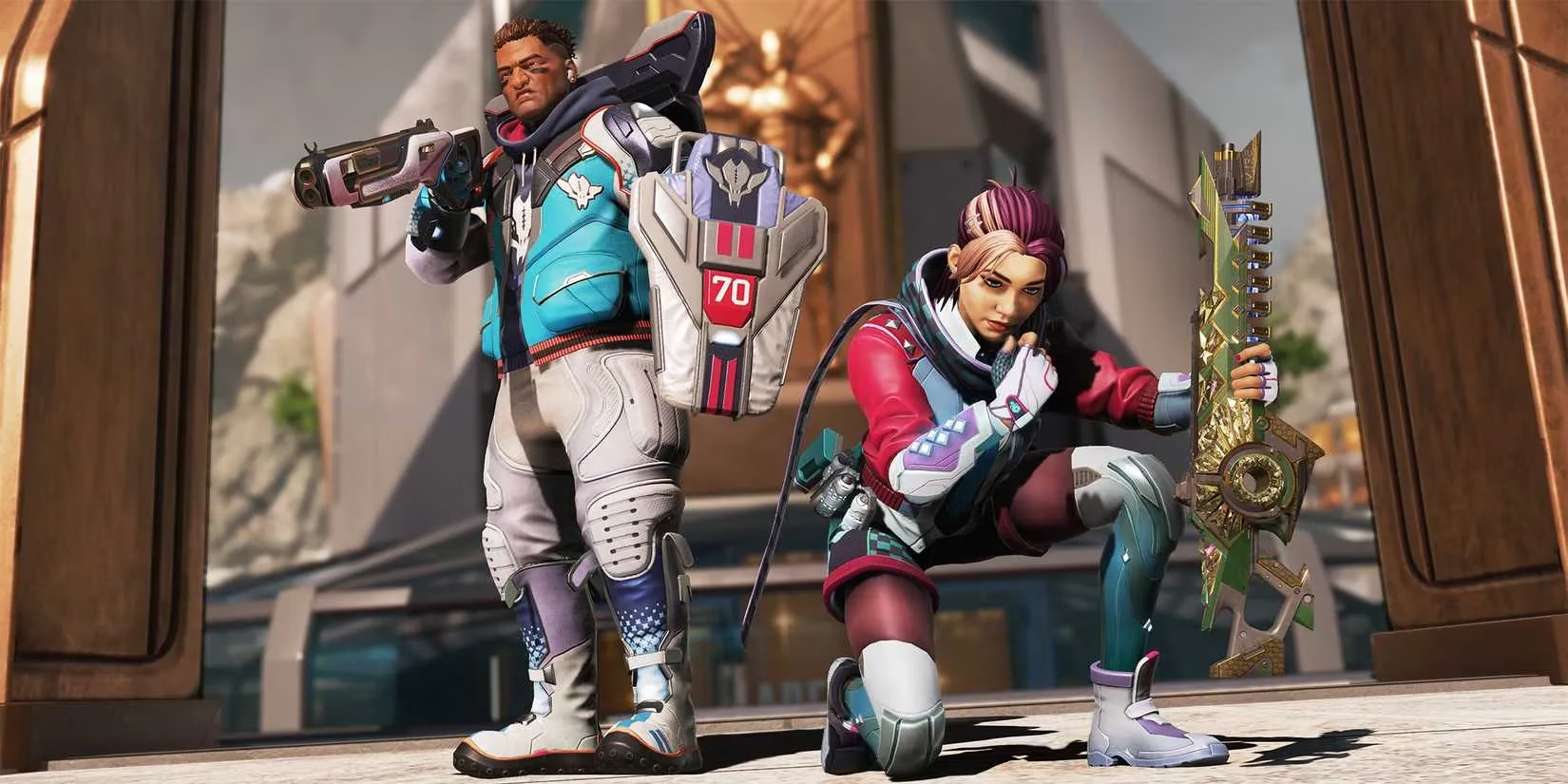
This ban didn't happen in a vacuum. Since Russia's military actions in Ukraine, Roskomnadzor has aggressively restricted foreign media, labeling Meta as extremist and banning Facebook, Instagram, and YouTube. In 2024, Discord was also blocked, devastating Russia's gaming community. 😠 As a gamer, I empathize with Russian players who've lost access to essential tools; it's like having part of your identity stripped away. Moreover, several game developers have imposed their own sanctions. EA, for example, banned Russia and Belarus from esports programs for Apex Legends and FIFA, stating, "We stand in solidarity with the people of Ukraine." Other companies like Nintendo, Sony, Microsoft, Ubisoft, and Activision Blizzard have halted sales. This tit-for-tat escalation saddens me—it turns gaming into a political battlefield, hurting ordinary players the most. When will we learn that games should transcend borders?
Child Safety Concerns and Roblox's Response
Amidst these geopolitical storms, Roblox faces internal turmoil over child safety. The lawsuits allege exposure to sexual content and exploitation, with critics slamming the lack of age verification. 😓 Personally, as a player who's seen younger siblings use Roblox, I find these allegations alarming; it's a wake-up call for better protections. In response, Roblox's leadership dismissed much criticism as sensationalism but rolled out new safety measures in 2025. These include:
-
An age estimation system requiring ID scans and self-photos.
-
Restricted chat for users under 8 years old.
-
Age-based sorting in chat groups.
-
Enhanced parental controls for monitoring screen time, friends, and content.
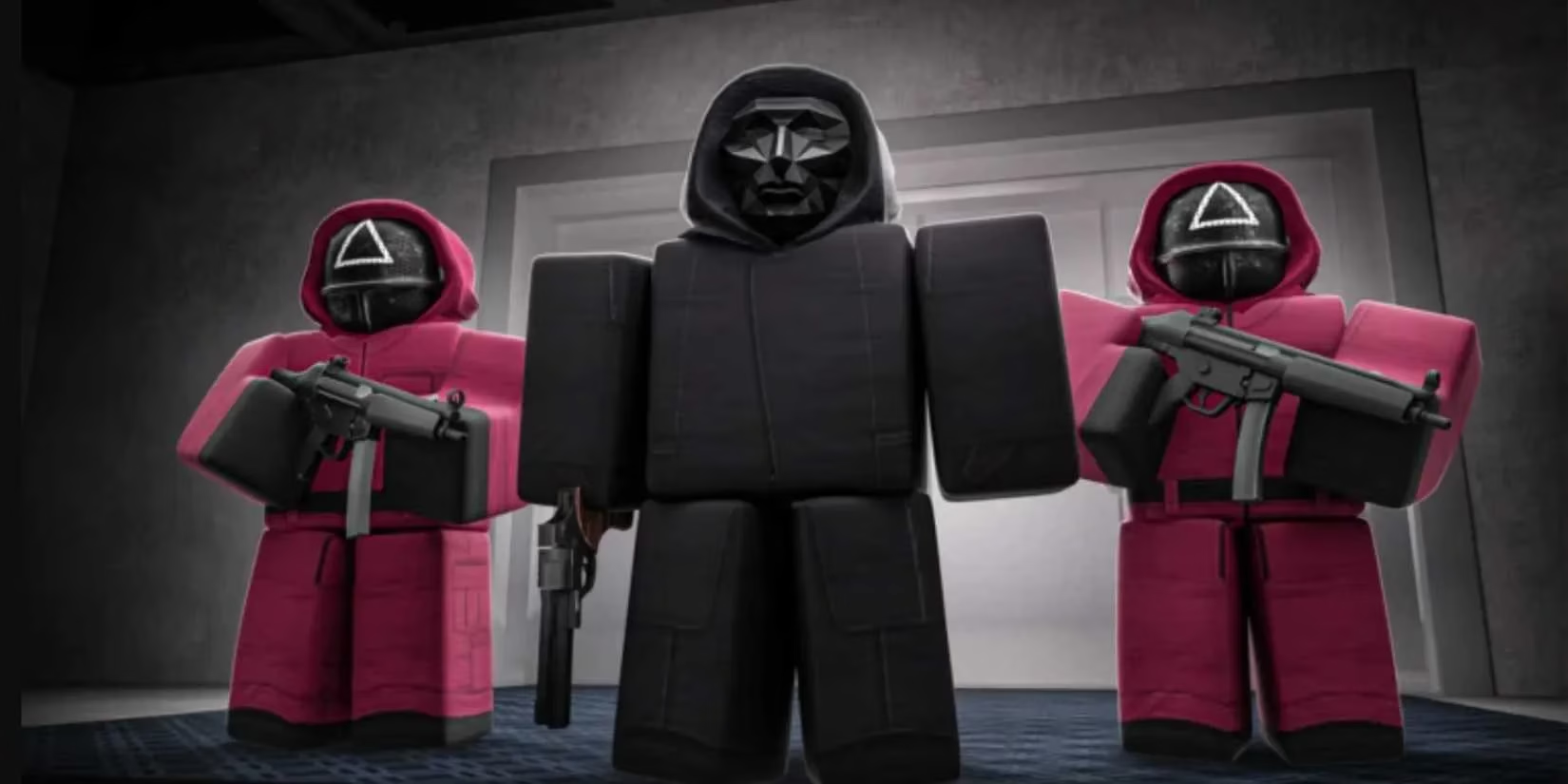
While these steps are commendable, I question if they're enough. The platform's promo art often features innocent characters, but the reality can be murkier. For instance, games like Shrimp Game have faced scrutiny for inappropriate themes. As a community member, I urge Roblox to double down on safety—after all, shouldn't our virtual playgrounds be sanctuaries, not danger zones?
Looking Ahead: Open Questions for the Gaming World
As we navigate 2025, the Roblox saga leaves us with more questions than answers. The Russian ban may dent player counts, but it symbolizes a larger clash between innovation and regulation. 🤔 From my perspective as a gamer, I wonder: Will other nations follow Russia's lead, creating a splintered internet where access depends on geography? How can platforms like Roblox balance creative freedom with safety without stifling the very essence that makes them great? And in an era of global tensions, can gaming remain a unifying force, or will it become another casualty of division? These aren't just hypotheticals; they're pressing issues that demand our collective reflection. As I log off today, I'm left pondering—what kind of digital future do we want to build, and who gets to decide?
Leave a Comment
0 Comments