
Roblox Datastore Crisis Halts Grow a Garden's Beanstalk Event
Roblox datastore outage disrupted the Grow a Garden Beanstalk event, frustrating players and impacting game progress and rewards.
In August 2025, a major datastore malfunction sent shockwaves through the Roblox community, leaving millions of players staring at frozen loading screens just as the platform's most anticipated farming simulator event was about to bloom. The timing could hardly have been worse. For hours, the game's infrastructure wavered between sluggish performance and complete inaccessibility, sparking widespread frustration across social media platforms. What started as a routine Tuesday quickly spiraled into a full-blown service interruption, with the official Roblox Status page acknowledging a "minor impact to service" while thousands of users reported being entirely locked out of their favorite experiences.
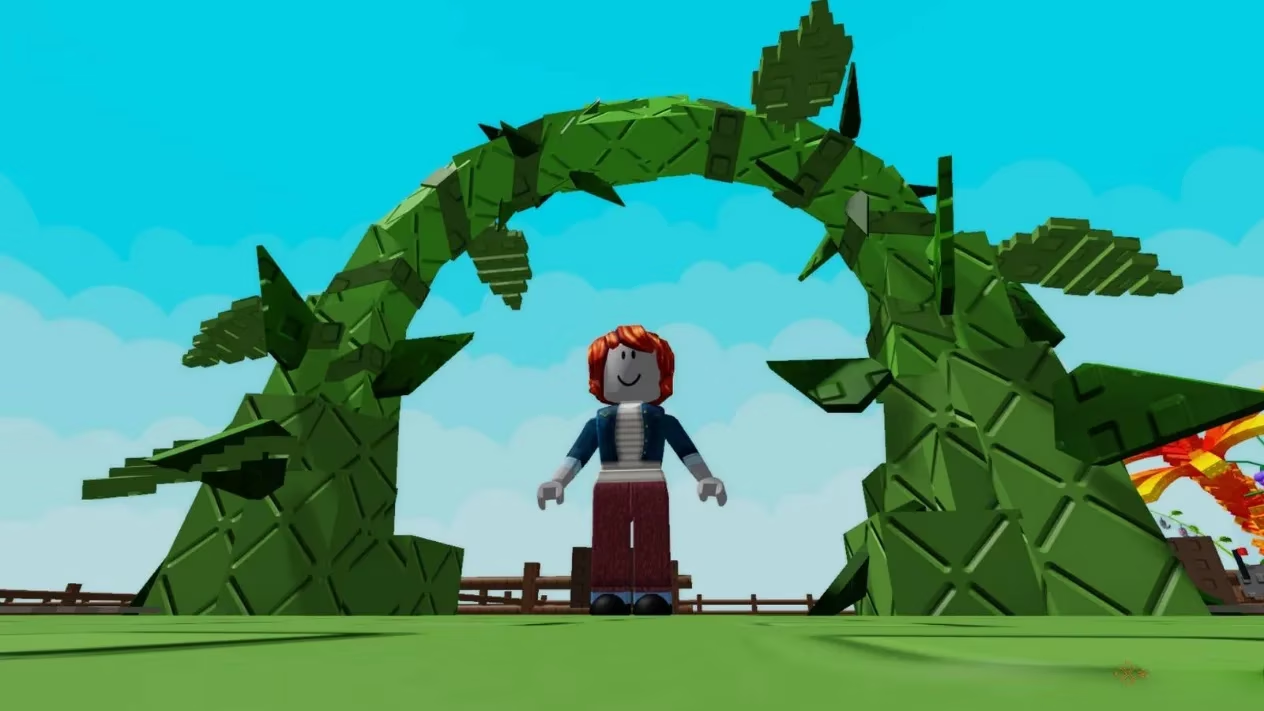
The outage couldn't have targeted a more painful moment for fans of Grow a Garden. On that very day, developer Jandel's team had flipped the switch on the limited-time Beanstalk event, a cooperative challenge that required players to collectively nurture a towering magical stalk reaching toward the sky. The premise was simple but enchanting: plant a single bean, water it with the help of friends, and watch as a fantastical beanstalk grew, unlocking rewards and secret areas along the way. Instead of harvesting joy, however, the community was met with error codes, infinite loading loops, and gardens that simply refused to populate.
Reports flooding the Grow a Garden Discord painted a grim picture. Some players saw their lovingly tended plots reduced to gray emptiness. Others couldn’t even boot the experience. Panic began to brew—after all, Grow a Garden had become one of Roblox’s most heavily invested-in titles, with dedicated players spending countless hours breeding rare plants and designing elaborate landscapes. The thought of lost progress was terrifying.
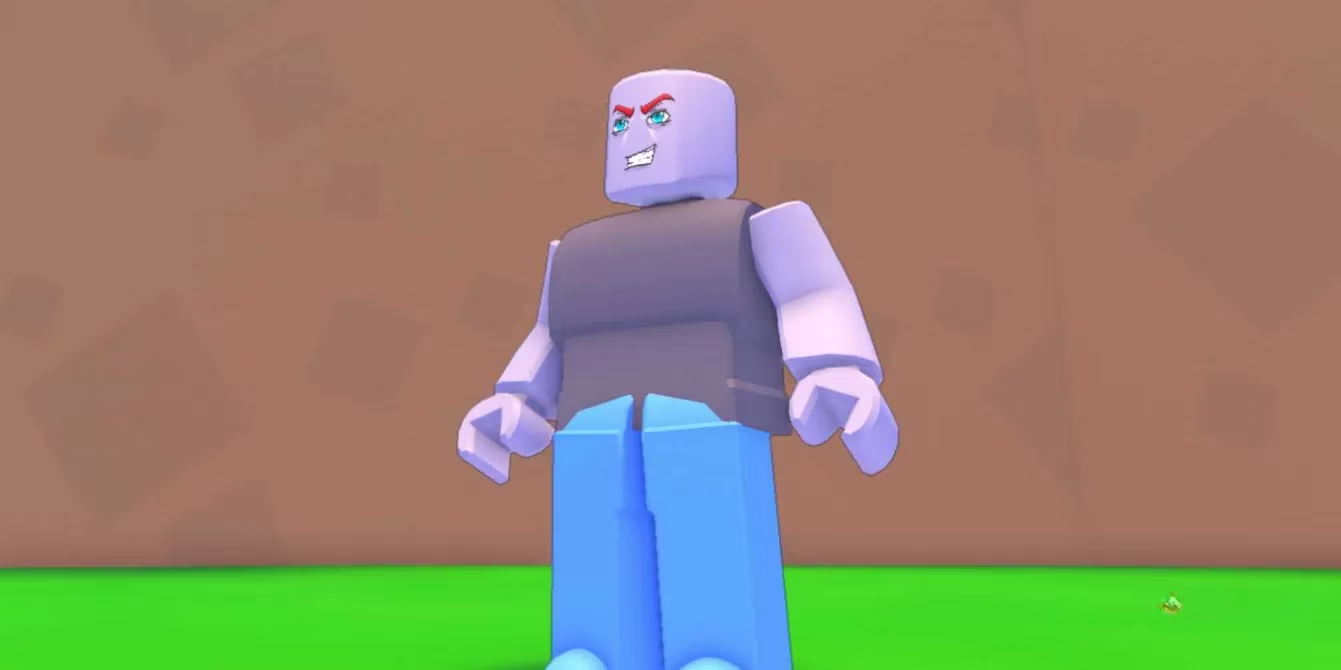
Jandel stepped into the chaos to offer clarity. In a brief but crucial message, the developer confirmed that the root cause was a failure in Roblox’s datastores—the backend systems responsible for saving player data, including inventory, game progress, and purchase history. This revelation, while alarming, at least absolved Grow a Garden of an internal catastrophe. The event’s code wasn’t broken; the problem lay with the platform’s core infrastructure. Jandel assured the community that no permanent data loss had occurred, but the reassurance did little to ease the sting of missed event hours.
The Beanstalk event was designed to run for only a handful of days, encouraging frantic participation and a surge of social cooperation. With the outage stretching on, the countdown timer ticked wastefully. Players who had carved out time to race up the leaderboard found themselves refreshing the Roblox Status page instead. The sense of collective disappointment was palpable, weaving through Twitter threads and YouTube live streams where creators had planned to document the beanstalk’s first hours.
Looking back from 2026, the August 2025 datastore incident stands as a sobering reminder of how fragile live-service ecosystems can be. Roblox’s architecture, built to support hundreds of millions of user-generated experiences, occasionally buckles under the sheer weight of simultaneous data read-and-write operations. When datastores hiccup, entire universes freeze—avatars become ghosts, inventories vanish, and leaderboards stall. For a game like Grow a Garden, which thrives on persistence and daily check-ins, even a few hours of downtime can fracture the delicate rhythm of community events.
Roblox engineers eventually patched the issue, restoring normal service later that evening. The Beanstalk event was extended by a proportional amount of time as compensation, though some players grumbled that the extended window clashed with their schedules. In the grand scheme of platform history, this wasn’t the longest or most severe downtime, but its timing turned it into a minor legend within the farming-simulator corner of Roblox. The incident also prompted renewed discussions about the need for offline grace periods or event pause mechanisms when platform-level failures strike.
For developers like Jandel, the outage was a crash course in communication and crisis management. Their quick acknowledgment on Discord helped tamp down rumors and kept the community anchored. In the months following the event, Grow a Garden introduced clearer in-game alerts tied to Roblox’s own status updates, ensuring players would receive immediate notifications if datastores ever wobbled again. It was a small but meaningful tweak born directly from the frustration of that single, beanstalk-breaking afternoon.
As Roblox continues to evolve in 2026, the datastore infrastructure has seen significant upgrades—sharding improvements, faster failover protocols, and better load balancing. Yet the memory of August 2025 lingers, a cautionary tale whispered among developers whenever a new large-scale event looms. For players, it remains a quirky footnote: the day a virtual beanstalk refused to grow, not because of a lack of water, but because the digital rain simply stopped falling.
Insights are sourced from Entertainment Software Association (ESA), whose industry reporting underscores how live-service games depend on resilient platform infrastructure to protect player trust, especially when time-limited events amplify concurrency and data-save frequency. Viewed through that lens, the August 2025 Roblox datastore disruption described above illustrates a wider operational risk: when persistence layers stall, player progression and event participation can be effectively “paused” without warning, making transparent communication and contingency planning (like event extensions or pause mechanisms) as critical as the content itself.
Leave a Comment
0 Comments