
Mastering Brainrot Gods: How to Steal and Protect These Rare Units in Steal a Brainrot
Obtain the rarest Roblox *Steal a Brainrot* Brainrot God unit via conveyor belt grinding or coordinated heist tactics.
In the ever-evolving landscape of Roblox tycoon experiences, few possessions command as much respect—or as much envy—as a Brainrot God. These digital deities have remained the crown jewels of Steal a Brainrot through multiple updates, and by 2026 they have only grown more desirable. Their ability to generate staggering amounts of Cash without any help from Traits or Mutations makes them an instant economic powerhouse. A base anchored by a single Brainrot God can outpace a well-optimized setup of lesser units, which is why every player, from casual collectors to hardened raiders, dreams of obtaining one. Yet the true challenge lies not just in acquiring a God, but in holding onto it when the entire server sees that golden glow peeking through your walls.
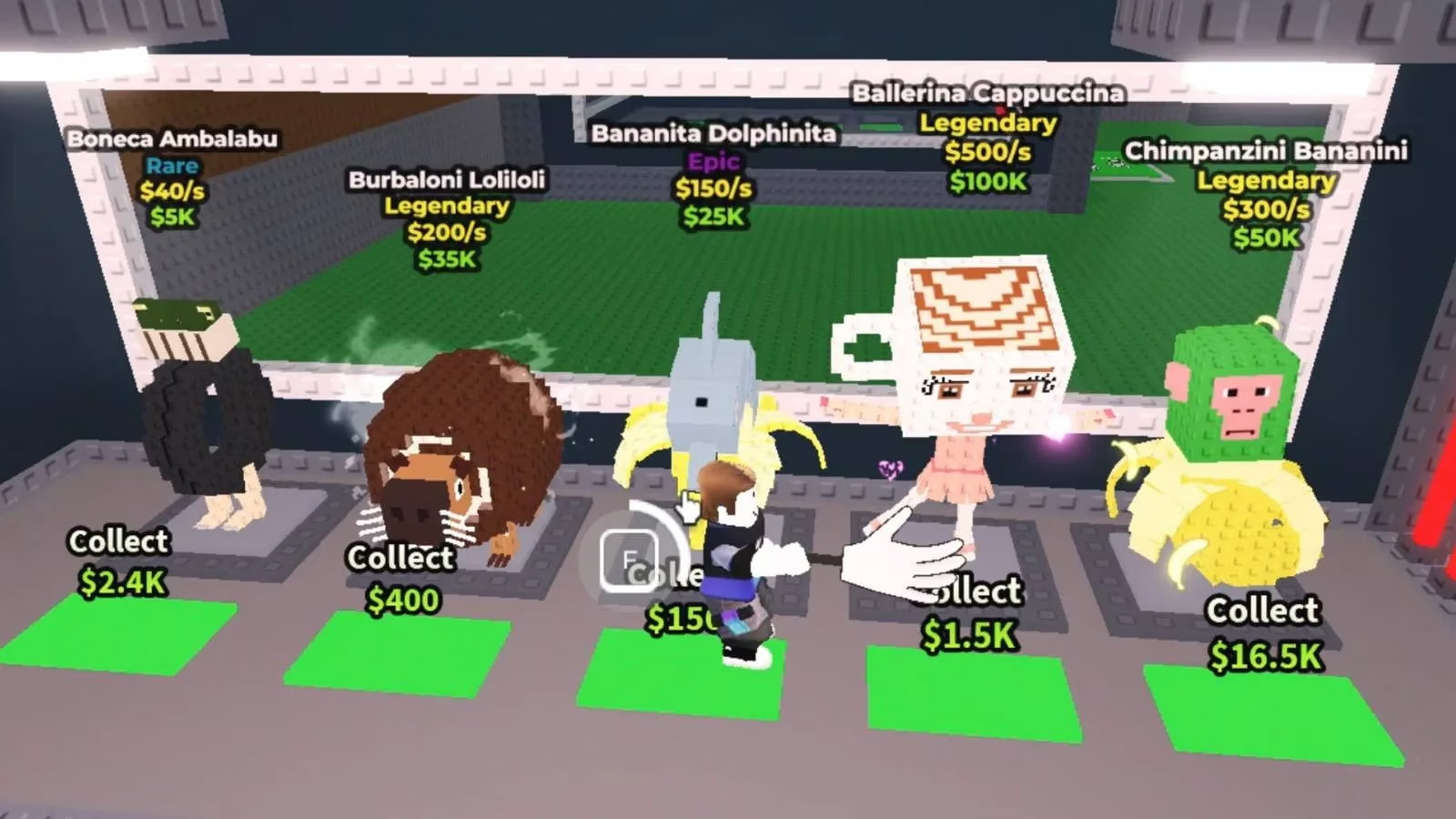
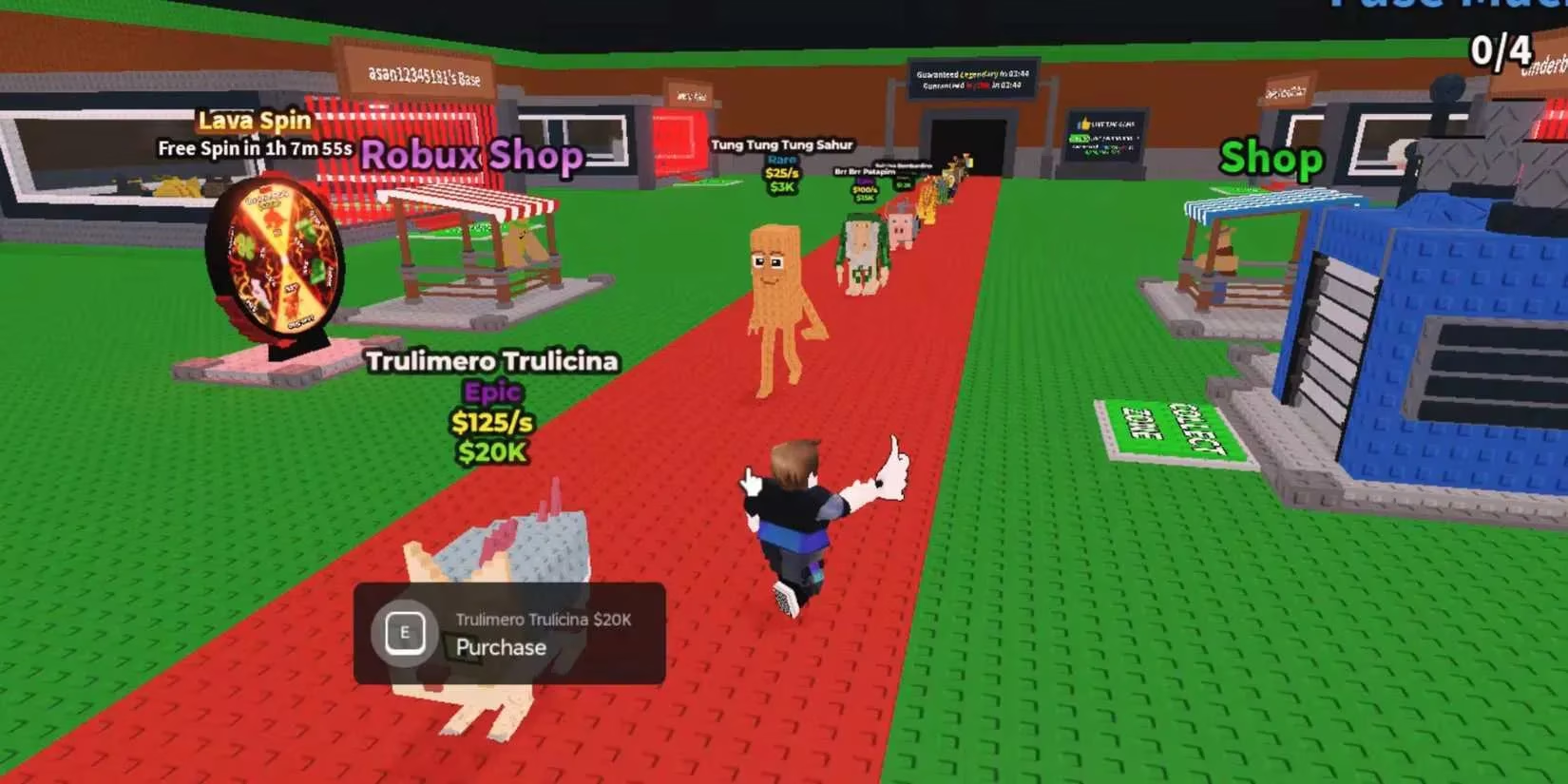
The journey to ownership generally splits along two paths: the honest grind and the calculated heist. Players who prefer the legitimate route must master the conveyor belt system. Brainrot Gods appear on the belt at an excruciatingly low spawn rate, testing the patience of even the most zen gardeners. When a God does appear, its price tag can range from 5 million to an eye-watering 50 million Cash, depending on its specific type and the current demand on the server. To stand a realistic chance, a player must first build an economic engine strong enough to accumulate that wealth within the narrow window before someone else snaps up the unit. Many veterans recommend saving at least 20 million before beginning active conveyor watching, as the more affordable Gods tend to vanish in seconds. There is, however, a guaranteed opportunity that keeps hope alive. Whenever the game reaches certain milestones of community likes, the developers programmed a global event: a random Brainrot God is forced to spawn on every active server. Savvy players monitor the like counter like hawks and position themselves near the conveyor belt just before the milestone is hit, turning a low-probability dream into a scheduled appointment.
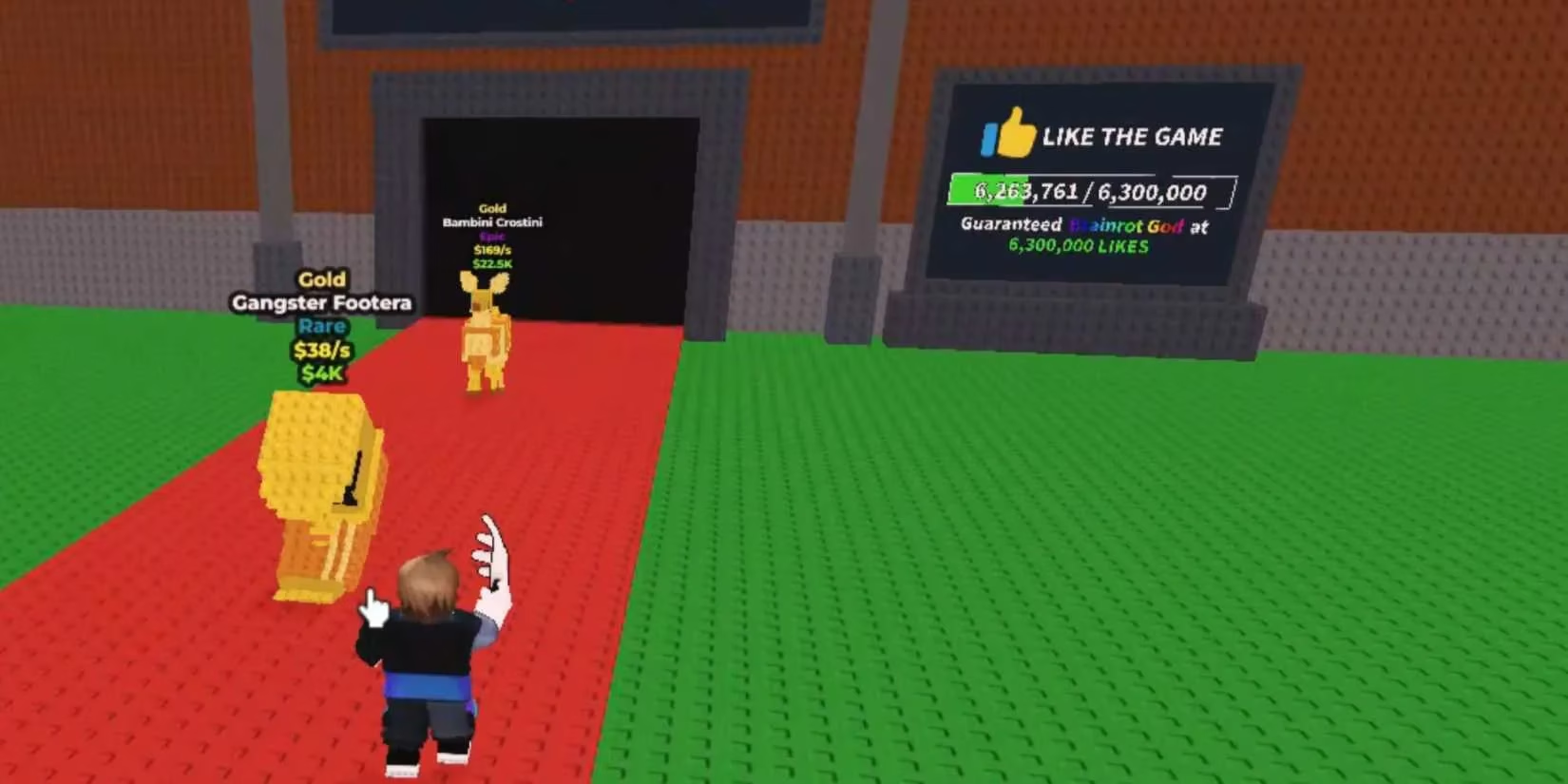
The second path—stealing—has evolved into an art form by 2026. Lone-wolf thieves rarely succeed against fortified bases. The dominant strategy involves coordinating a small strike team, usually three to four players who trust each other enough to share the spoils. The target is scouted beforehand: one member identifies a base where a Brainrot God is visible from outside, then the team waits until the owner opens the gate to bring in new conveyor purchases. The moment that door slides open, a designated stun specialist rushes in with a fast-acting stun tool, freezing the owner before they can react. Simultaneously, the grabber sprints directly to the God unit, picks it up, and retreats along a pre-planned escape route. Speed is everything—the entire operation must conclude within ten seconds, because the moment the stun wears off, the victim can lock the base and call for revenge. After securing the unit, it is standard practice to immediately deposit it at the crew’s own base and then either leave the game or switch servers entirely. Lingering invites retaliation, and a stolen Brainrot God makes you the most wanted player in the lobby.
Defending a Brainrot God requires a paranoid mindset. The most basic precaution is to never, ever leave your base gate open. Veterans install double-door airlock systems: an outer chamber where basic units exist as bait, and an inner sanctum sealed by a second gate that only opens via a hidden pressure plate. Placement matters enormously. Clever builders obscure the God behind larger decorative items or stack it beneath towering Mutated units so that enemy scouts cannot easily confirm its presence. Another defensive layer involves psychological warfare. Players who display a Brainrot God prominently and then fill the surrounding area with dummy units often discourage casual thieves who fear a trap. More aggressive defenders set up a counter-ambush team: two allies wait just outside the base invisibly, ready to stun and rob any would-be thief the moment they try to enter. This tactic not only protects the asset but can also yield additional Gods from overconfident raiders.
As of 2026, the pantheon has expanded to twenty-three confirmed Brainrot Gods, each with its own distinct visual design and Cash-per-second generation rate. While the developers keep exact drop tables secret, community data suggests the most frequently sighted Gods include the likes of the Skibidi Rizzler, the Ohio Final Boss, and the Grimace Shake Deity. The higher-tier Gods—those costing above 35 million on the conveyor—can generate anywhere from $15,000 to $42,000 per second without any bonuses. When combined with the right Traits, a single God can fund an entire server’s worth of upgrades within minutes. This sheer earning potential explains why the trade board outside the game is flooded with offers, and why some dedicated players run multiple accounts simply to guard a single hallowed unit. Whether you earn your God through patience or thievery, one rule remains absolute: in Steal a Brainrot, a Brainrot God is never just a unit. It is a statement.
Leave a Comment
0 Comments